Karpathy Said Something You’ll Regret Ignoring
Karpathy said something you’ll regret ignoring
Lire
Karpathy said something you’ll regret ignoring

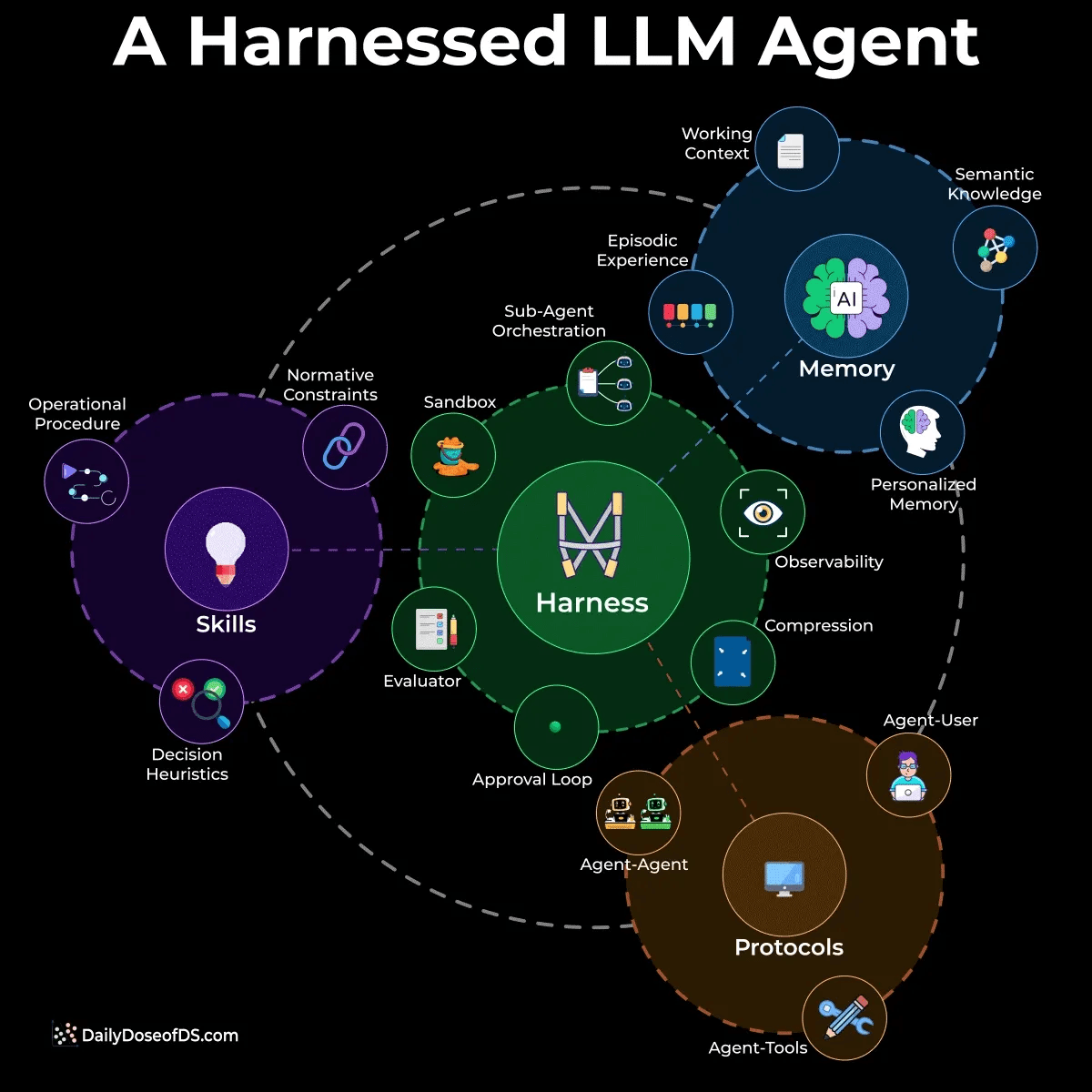
The following originally appeared on Hugo Bowne-Anderson’s Vanishing Gradients Substack and is being republished here with the author’s permission. The conversation around harness engineering is dominated by problems from coding and personal agents such as OpenClaw, but most agents are simpler. Builders should avoid over-engineering for capabilities that newer models may absorb anyway, the “Kirby […]
San Francisco tip: it only costs around $15 ($10 in quarters plus a $5 bill for the self-playing violin) to activate every single Orchestrion in Musée Mécanique. And because most people are bad at allocating their funds you may well be the ONLY person activating the Orchestrions, which means you get to craft the soundscape for the entire museum. Tags: san-francisco
California Sea Lion, in San Francisco County, US, CAWe took some visiting family to Pier 39 to see the sea lions. They're somehow always even fun than I remember them being last time. Tags: san-francisco, wildlife
Nativ: Run AI models locally on your Mac Prince Canuma is the developer behind the excellent MLX-VLM Python library for running vision-LLMs using MLX on a Mac. I'm really excited about his new project, which wraps MLX in a full macOS desktop application. It's similar in shape to LM Studio, providing both a chat interface and a localhost API server for accessing models. The app picked up MLX models I had already tried that were present in my Hugging Face cache directory, which was a nice touch.…
Earlier this month I hosted a fireside chat session at the AI Engineer World's Fair with Cat Wu and Thariq Shihipar from Anthropic's Claude Code team. We talked about Claude Code, Claude Tag, Fable, coding agent security, evals, tool design, and how Anthropic use these tools themselves. The full video of the session is now available on YouTube. Below is an edited copy of the transcript, with extra links and my own bolded highlights. A few top-level notes if you don't want to watch the video or…
I’ve been working on the Quality Playbook, my open source AI skill that uses quality engineering to find bugs that normal AI code review misses, and I recently had a batch of work that turned into a long run of point releases. I was using Claude Cowork as the orchestrator: planning scope, dispatching instructions to […]

The full RL nanodegree, covered with implementation.
I keep hearing anecdotes from people who used coding agents to reverse-engineer and automate devices in their homes. I think this is an interesting illustration of the impact of the reduced cost of writing code. Prior to agents, it was entirely possible to reverse-engineer home devices. The problem was the ROI - was it really worth all of that effort? More importantly, any experienced programmer knows that undocumented, unstable APIs like that may well change or break in the future. Is that…
Who’s Afraid of Chinese Models? Interesting proposal from Ben Thompson that both addresses the hypocrisy of labs outlawing distillation against their models despite training on unlicensed data, and could help US open models compete more effectively with their Chinese counterparts: The U.S. should pass a law that (1) makes explicit that collecting data for training models is fair use, and (2) bars terms of service that forbid distillation, for U.S. companies at a minimum. Stopping distillation —…

The singularity will be seen in hindsight as an interregnum
Somewhere in a Singapore data center, a bank is paying for eight H100s that spend most of the night waiting. The cluster was bought for good reasons (discomfort with customer documents leaving the building, a strategy team’s aversion to lock-in), so the bank secured its own sovereign compute. Now the finance team is asking why […]
We have been having extensive discussions around open source strategy. We will discuss it more at our next board meeting, but one thing we’d like to do soon is to create a language model with the approximate capability of GPT-3 that can run locally on consumer hardware and release that. We’d like to do it soon, before Stability or someone else does. In general, we think this helps discourage others from releasing similarly-powerful models, and makes it harder for new efforts to get funded.…
...step-by-step, from scratch, using open-source stack.