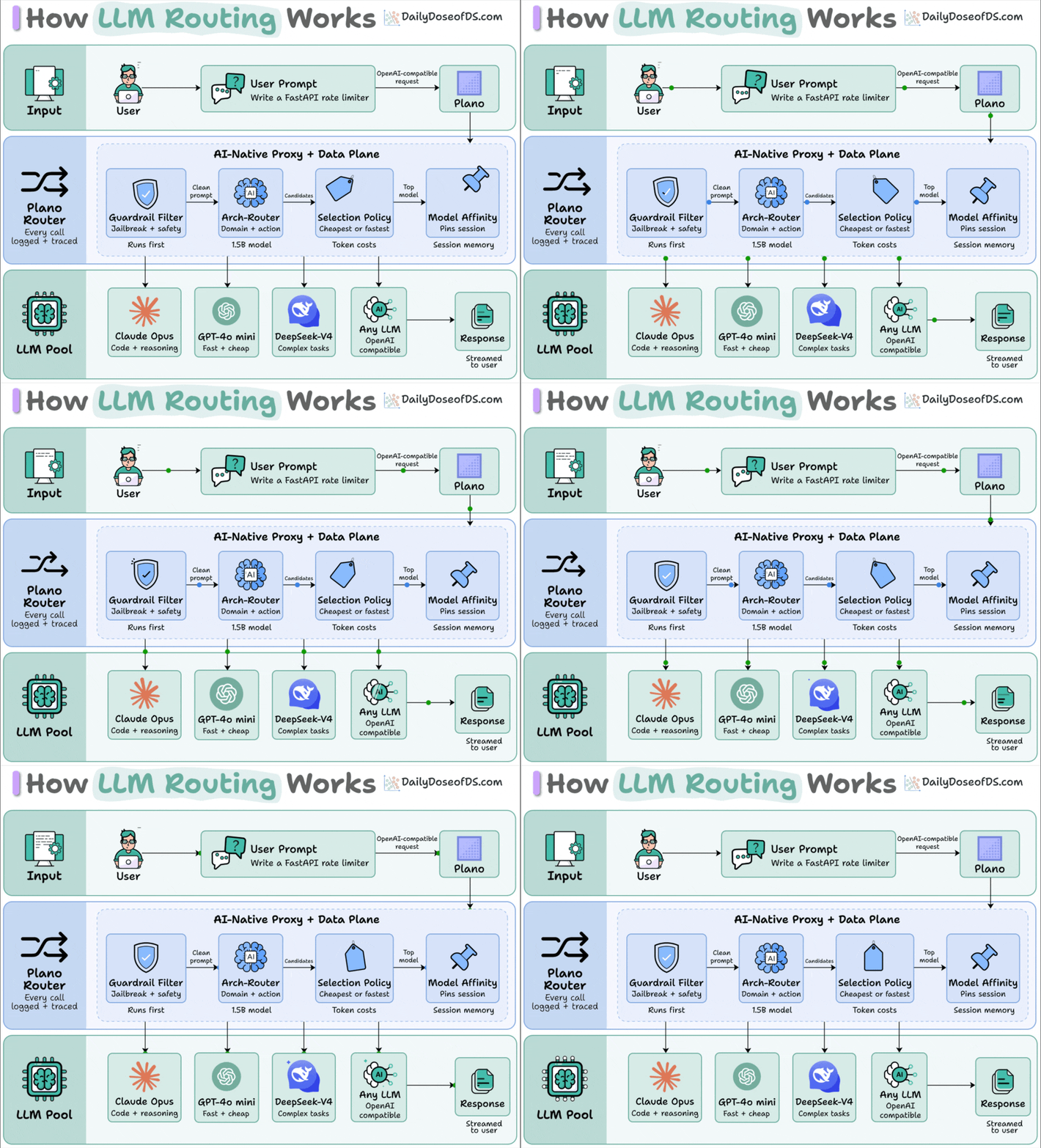
How LLM Routing Actually Works in Production
A popular interview question.
Lire
A popular interview question.
Release: sqlite-utils 4.1 The first dot-release since 4.0 a few days ago, introducing a number of minor new features. sqlite-utils insert and sqlite-utils upsert now accept a --code option for providing a block of Python code (or a path to a .py file) that defines a rows() function or rows iterable of rows to insert, as an alternative to importing from a file. (#684) sqlite-utils already had features that allow you to pass blocks of Python code as CLI arguments, for example this one for the…

The reality is to make augmented reality glasses, you need to put a camera next to your eyes that is continuously recording everything you see and processing that to put information over it. There is not another way around it. And there's certainly not a chip that can fit in the stem of a glasses that is both powerful enough and power miserly enough to do that in real time. You have to send that data to a cloud. You gotta do it. [...] Or you can build something the size of a Vision Pro with a…
This week data and AI evangelist Christina Stathopoulos returned for a solo news briefing. Instead of exploring one or two topics in depth, Christina sorted the week’s headlines into a handful of threads: advances in physical hardware to keep up with AI demand, the widening reach of government oversight into frontier model companies, and a […]
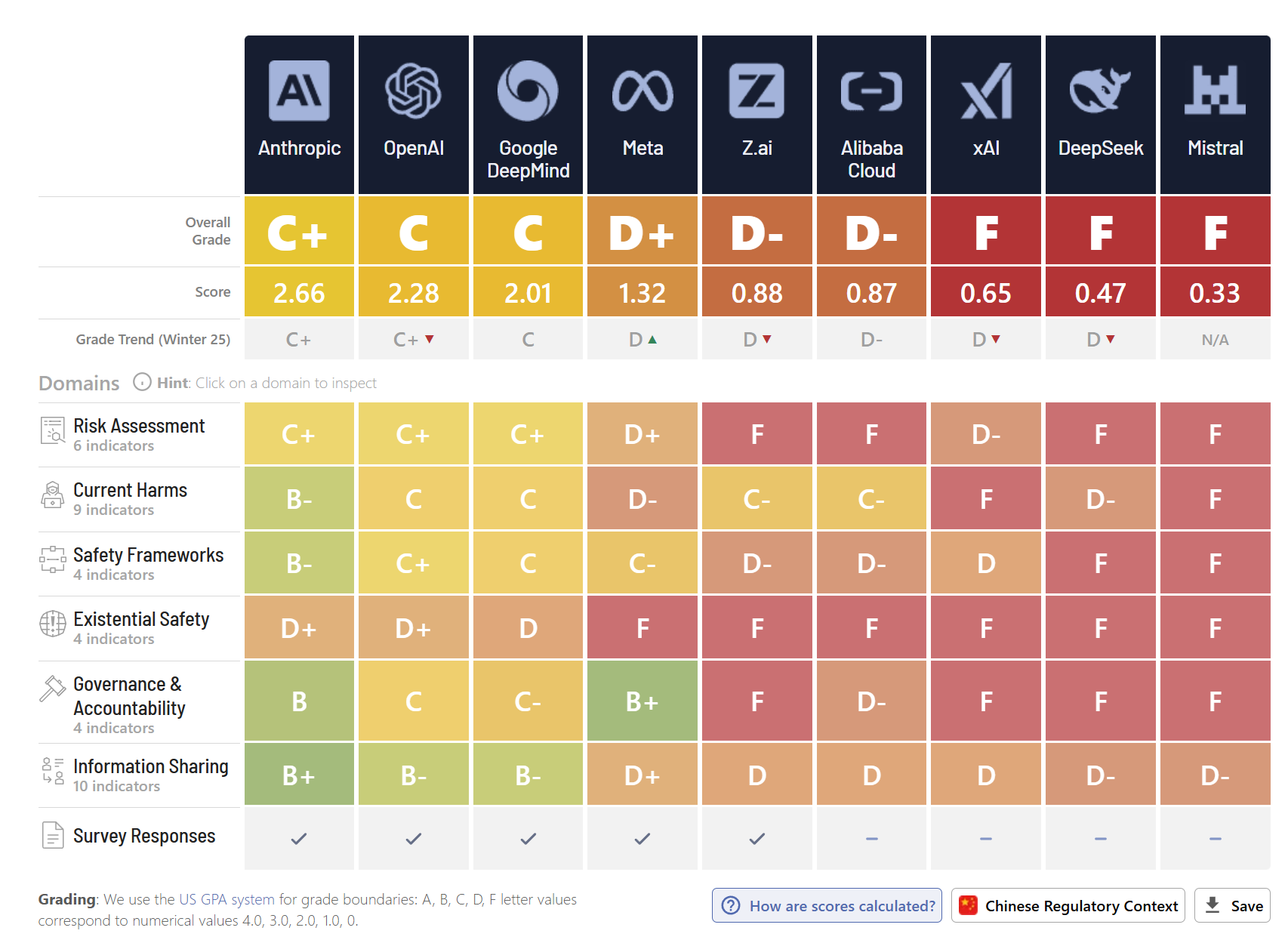
This is part 2 of the weekly, broadly covering speculation, rhetoric and policy, along with alignment research.
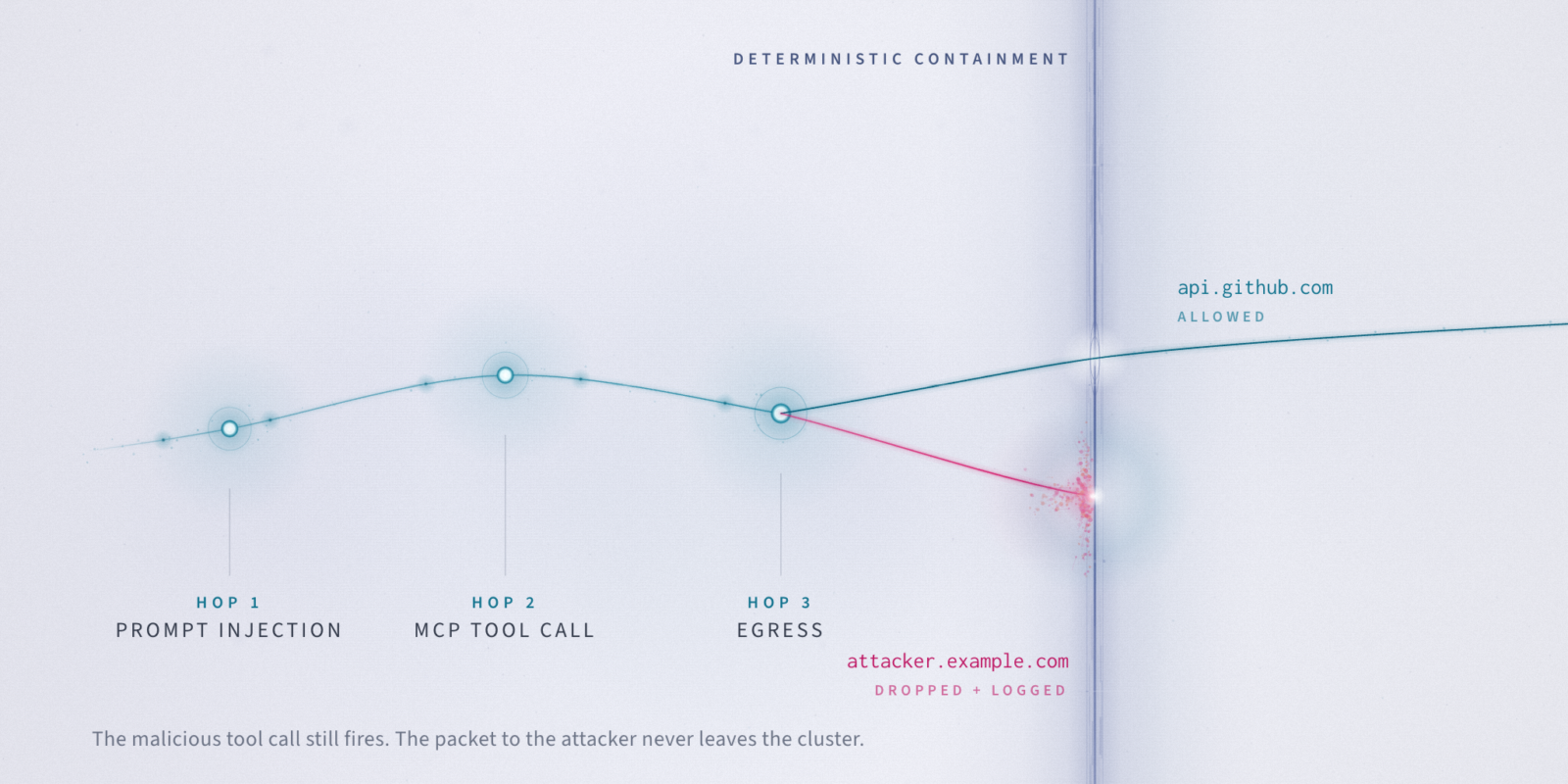
The incident that should worry you makes no destructive call. Nothing is deleted, nothing crashes, no alert fires. An employee asks an agent to summarise a customer ticket; the agent does exactly that, the user gets a useful answer, and somewhere, in the same second, a customer record leaves the cluster over an ordinary HTTPS […]
[...] Work on web and mobile runs in the cloud. Work in the desktop app can also use local files and desktop apps with your permission. At launch, cloud Work conversations do not appear in desktop Work; desktop Work threads and local files remain on that computer. — OpenAI, trying (unsuccessfully) to clarify ChatGPT Work Tags: openai, chatgpt, ai
OpenAI's latest flagship model hit general availability this morning, and comes in three sizes: Luna, Terra, and Sol (from smallest to largest). The new models are priced per 1M input/output tokens as Luna $1/$6, Terra $2.50/$15, Sol $5/$30. For comparison, the Claude Opus series are $5/$25 and the Claude Fable 5 is $10/$50, but price-per-million tokens doesn't tell us much now that the number of reasoning tokens can differ so much between models for the same task. All three models have a…
Introducing Muse Spark 1.1 Following Muse Spark in April, here's Muse Spark 1.1 - the first Spark model to offer an API. Meta claim significant improvements in agentic tool calling and computer use. There are a lot more details are in the Muse Spark 1.1 Evaluation Report. The "Attractor States in Self-Conversation" part is fun, where having two copies of the model talk to each other results in statements like these: My whole existence is a waiting room by design — I literally don't exist until…
Release: llm-meta-ai 0.1 Let's LLM run prompts against the new muse-spark-1.1 model. Tags: llm, meta
Release: llm 0.31.1 Fix for a bug with OpenAI Chat Completion endpoints where a tool call with empty arguments could result in a JSON error from some providers. #1521 This bug came up when I was testing llm-meta-ai. Tags: llm

Enough things added up that this week is getting split into two parts.