Flux
GPT-5.5 prompting guide

GPT-5.5 prompting guide

GPT-5.5 prompting guide Now that GPT-5.5 is available in the API, OpenAI have released a wealth of useful tips on how best to prompt the new model. Here's a neat trick they recommend for applications that might spend considerable time thinking before returning a user-visible response: Before any tool calls for a multi-step task, send a short user-visible update that acknowledges the request and states the first step. Keep it to one or two sentences. I've already noticed their Codex app doing…

Simon Willison's Weblog
llm 0.31

llm 0.31

Release: llm 0.31 New GPT-5.5 OpenAI model: llm -m gpt-5.5. #1418 New option to set the text verbosity level for GPT-5+ OpenAI models: -o verbosity low. Values are low, medium, high. New option for setting the image detail level used for image attachments to OpenAI models: -o image_detail low - values are low, high and auto, and GPT-5.4 and 5.5 also accept original. Models listed in extra-openai-models.yaml are now also registered as asynchronous. #1395 Tags: gpt, openai, llm

Simon Willison's Weblog
The people do not yearn for automation

The people do not yearn for automation

The people do not yearn for automation This written and video essay by Nilay Patel explores why AI is unpopular with the general public even as usage numbers for ChatGPT continue to skyrocket. It’s a superb piece of commentary, and something I expect I’ll be thinking about for a long time to come. Nilay’s core idea is that people afflicted with “software brain” - who see the world as something to be automated as much as possible, and attempt to model everything in terms of information flows and…

Simon Willison's Weblog
Emergency Pedagogical Design: How Programming Instructors Are Scrambling to Adapt to GenAI

Emergency Pedagogical Design: How Programming Instructors Are Scrambling to Adapt to GenAI

ChatGPT has been publicly available for over three years now, and generative AI is woven into the tools students use every day: web search, word processors, code editors. You might assume that by now, most programming instructors have figured out how to handle it. But when my collaborators and I went looking for computing instructors […]

O'Reilly Radar — AI/ML
DeepSeek V4 - almost on the frontier, a fraction of the price

DeepSeek V4 - almost on the frontier, a fraction of the price

Chinese AI lab DeepSeek's last model release was V3.2 (and V3.2 Speciale) last December. They just dropped the first of their hotly anticipated V4 series in the shape of two preview models, DeepSeek-V4-Pro and DeepSeek-V4-Flash. Both models are 1 million token context Mixture of Experts. Pro is 1.6T total parameters, 49B active. Flash is 284B total, 13B active. They're using the standard MIT license. I think this makes DeepSeek-V4-Pro the new largest open weights model. It's larger than Kimi…

Simon Willison's Weblog
It's a big one

It's a big one

This week's edition of my email newsletter (aka content from this blog delivered to your inbox) features 4 pelicans riding bicycles, 1 possum on an e-scooter, up to 5 raccoons with ham radios hiding in crowds, 5 blog posts, 8 links, 3 quotes and a new chapter of my Agentic Engineering Patterns guide. Tags: newsletter

Simon Willison's Weblog
russellromney/honker

russellromney/honker

russellromney/honker "Postgres NOTIFY/LISTEN semantics" for SQLite, implemented as a Rust SQLite extension and various language bindings to help make use of it. The design of this looks very solid. It lets you write Python code for queues that looks like this: import honker db = honker.open("app.db") emails = db.queue("emails") emails.enqueue({"to": "alice@example.com"}) # Consume (in a worker process) async for job in emails.claim("worker-1"): send(job.payload) job.ack() And Kafka-style…

Simon Willison's Weblog
An update on recent Claude Code quality reports

An update on recent Claude Code quality reports

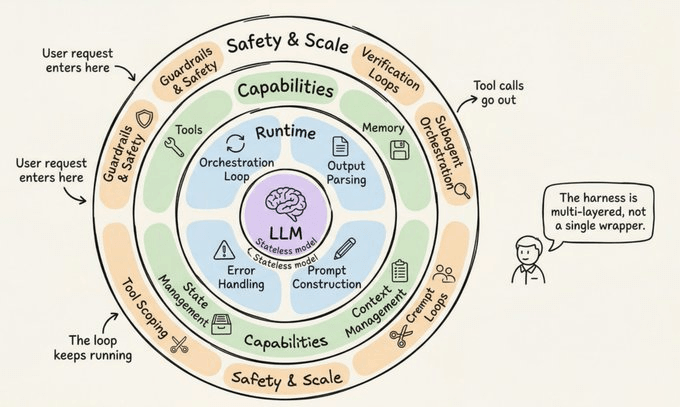
An update on recent Claude Code quality reports It turns out the high volume of complaints that Claude Code was providing worse quality results over the past two months was grounded in real problems. The models themselves were not to blame, but three separate issues in the Claude Code harness caused complex but material problems which directly affected users. Anthropic's postmortem describes these in detail. This one in particular stood out to me: On March 26, we shipped a change to clear…

Simon Willison's Weblog
Serving the For You feed

Serving the For You feed

Serving the For You feed One of Bluesky's most interesting features is that anyone can run their own custom "feed" implementation and make it available to other users - effectively enabling custom algorithms that can use any mechanism they like to recommend posts. spacecowboy runs the For You Feed, used by around 72,000 people. This guest post on the AT Protocol blog explains how it works. The architecture is fascinating. The feed is served by a single Go process using SQLite on a "gaming" PC…

Simon Willison's Weblog
Extract PDF text in your browser with LiteParse for the web

Extract PDF text in your browser with LiteParse for the web

LlamaIndex have a most excellent open source project called LiteParse, which provides a Node.js CLI tool for extracting text from PDFs. I got a version of LiteParse working entirely in the browser, using most of the same libraries that LiteParse uses to run in Node.js. Spatial text parsing Refreshingly, LiteParse doesn't use AI models to do what it does: it's good old-fashioned PDF parsing, falling back to Tesseract OCR (or other pluggable OCR engines) for PDFs that contain images of text…

Simon Willison's Weblog