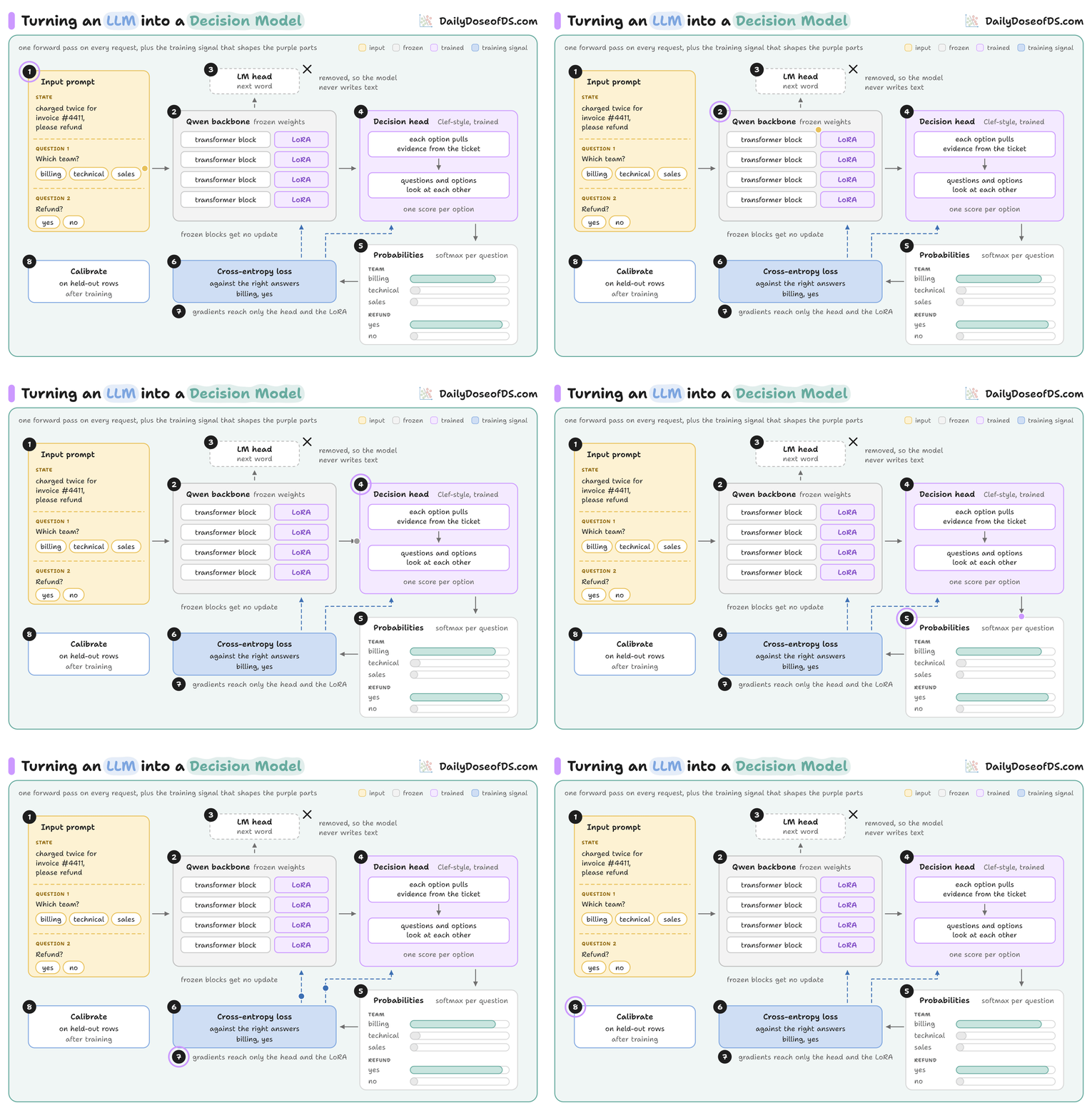
Run Jev Inside an Open Agent Harness
...with 150x cheaper decision-making than LLM
Lire
...with 150x cheaper decision-making than LLM
We think "did a human read the code?" is an imprecise proxy for "what could go wrong with this change, and which check—automated or human—is the right one to catch it?" Asking that question also changed when review happens. Before, review was a gate at the end of the road: write the code, open a PR, wait for your colleague. Now, review runs continuously, more like spellcheck while you write. Most changes have been reviewed and fixed by Claude at least once before a human is asked to look. This…
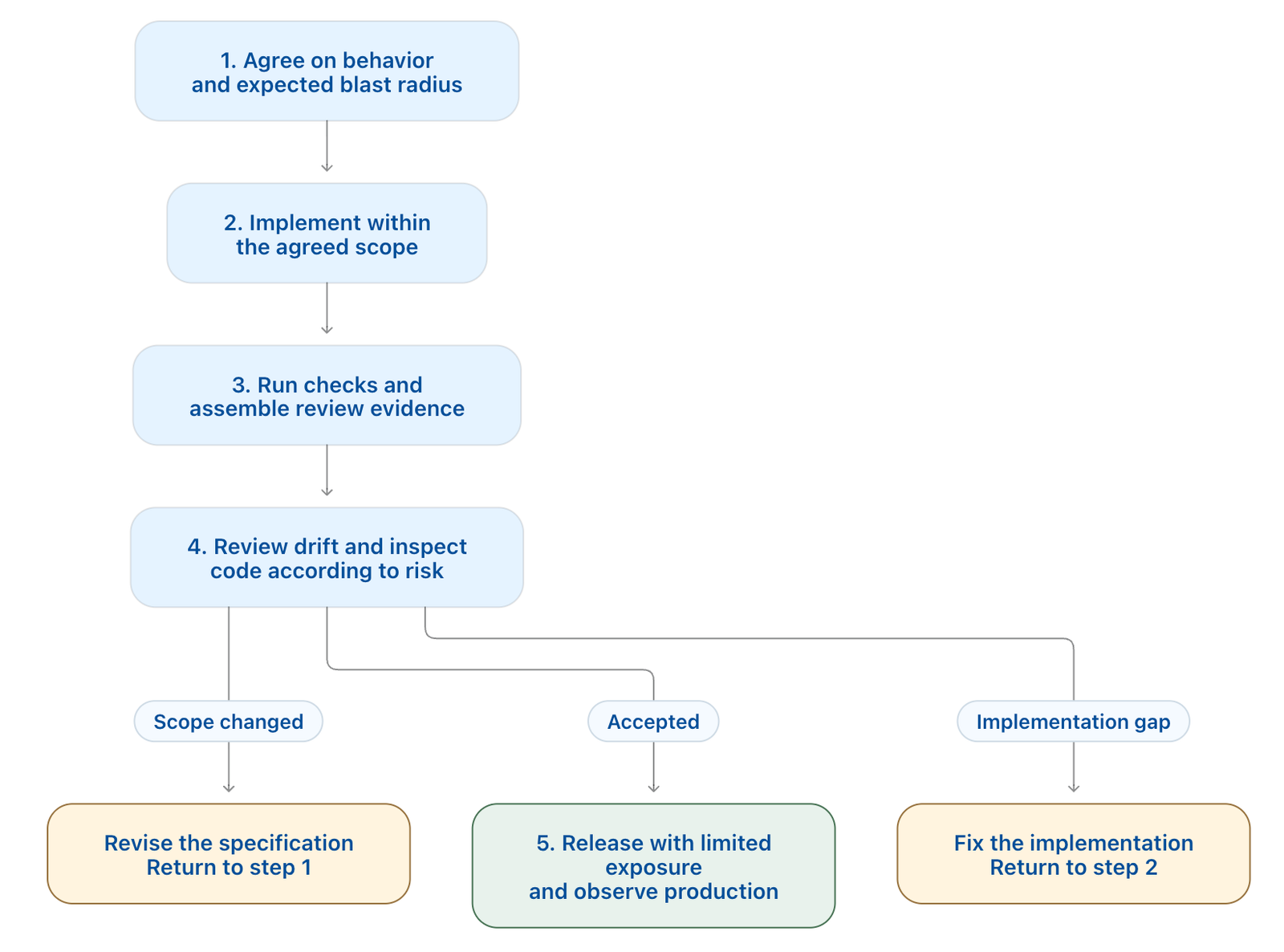
In my previous article, I argued that agentic development needs enough specification to make correctness checkable. A quick prompt can get implementation started quickly, but someone still has to decide whether the result does what we wanted. I left a fairly practical question unanswered, though. Once the agent has written the code, how should we […]
Research: sparqlite: SPARQL 1.1 inside SQLite, written in Rust This research task is really an experiment in running Claude Code for web in "Ultracode" mode, as described in Orchestrate subagents at scale with dynamic workflows in the Claude Code documentation. With Ultracode turned on, Claude Code makes aggressive use of dynamic workflows - it generates JavaScript that defines and coordinates a network of subagents to take on complex problems. My initial prompt was this - I meant "hit the rows…
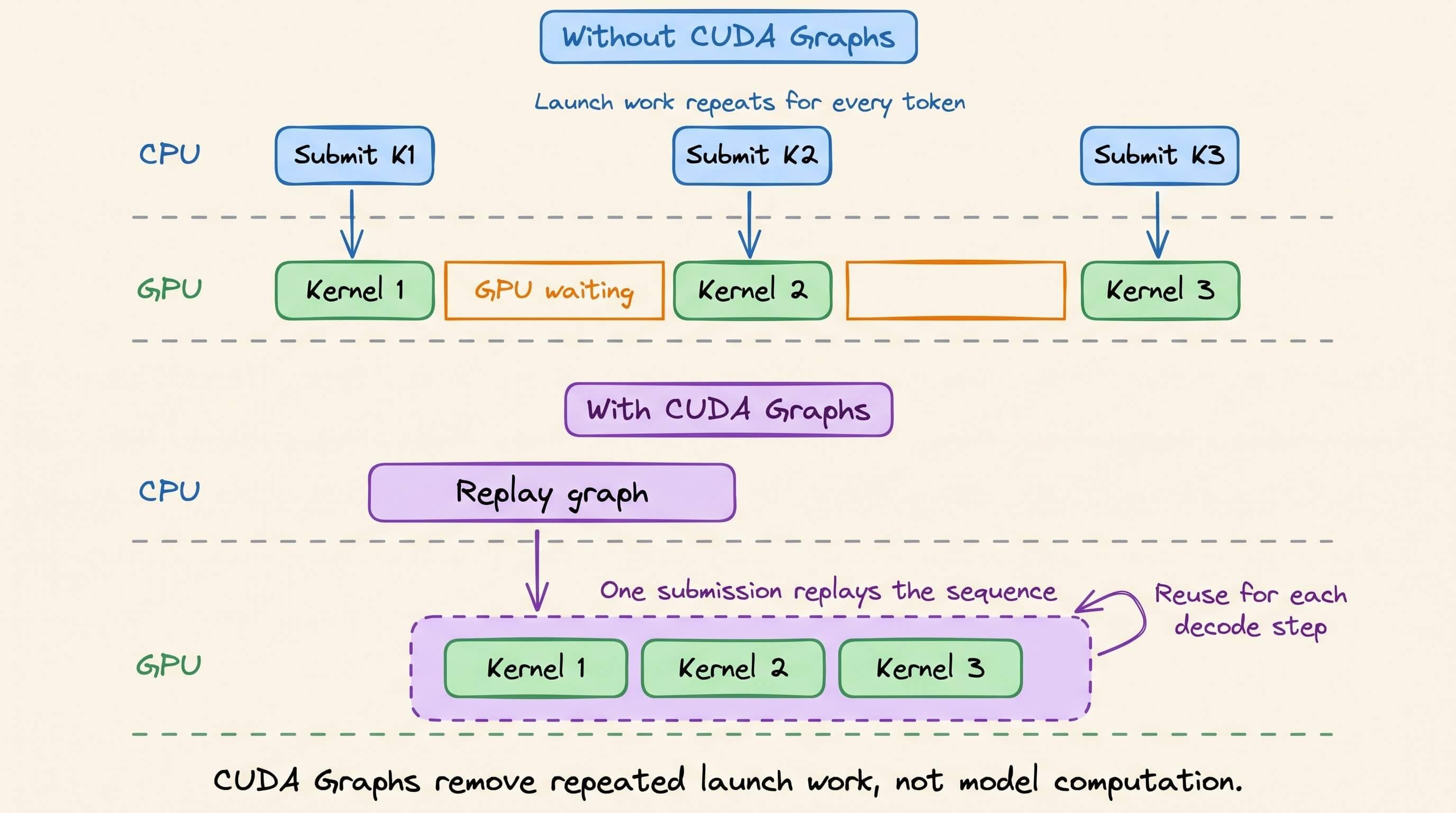
...explained step-by-step in a video.
Tool: Chirp Pong Another game experiment - I wanted to see if it was feasible to have a two player game on two separate phones running in static HTML where the networking code uses chirps sent via the microphone. It seems to work! Build a two player competitive pong like game where two players use their phones close to each other and the game state is sent via audio noises which the web microphone API can interpret - but add graphical and gameplay twists to make it a lot more fun and intertwine…
Anthropic tells investors quarterly revenue up nearly 50% to $16.8bn ahead of IPO The phrase "told investors" appears four times in this FT article, which reports on Anthropic's day of hosting investors on Wednesday. Lots of details in here from "people with knowledge of the matter". Key things I learned from the article: Q1 revenue (Jan/Feb/Mar) was "about $4.8bn" Q2 (Apr/May/Jun) was $11.5bn Q3 (Jul/Aug/Sep) was $16.8bn In Q3: $1.70 in revenue for every $1 spent on "computing power" Adjusted…
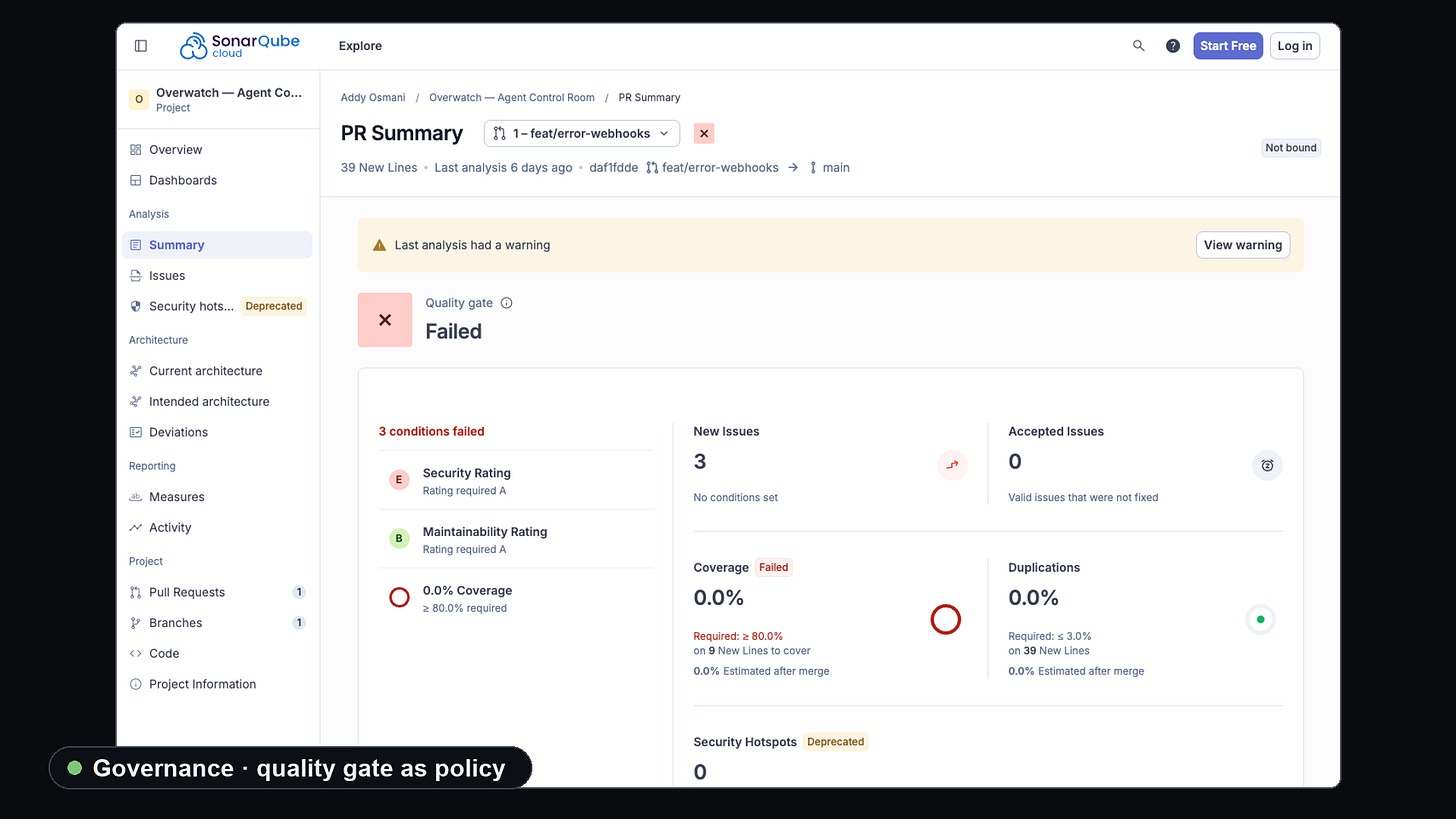
The following article originally appeared on Addy Osmani’s Elevate blog and is being republished here with the author’s permission. For much of human history, we’ve evaluated code quality via code review: Someone reads what you wrote and makes sure it’s clean, thoughtful, fast, understandable, and tests well. For agents, that approach doesn’t scale well; there’s […]
In this episode, we dive into how much models actually matter: more like a preference, like whether you use an iPhone or Android, than their capabilities. We talk about bare-metal disks when running Kubernetes, then move to agents and how data engineering becomes like being an emergency pilot in a plane, and how we automate away the boring work with no more database migrations or unit tests. We go into spiritual territory, where he feels in his gut whether a pipeline will work. Then we finish…
Tool: LaTeX renderer Inspired by Paul Ford and Aboard Foundary's new web app Tiny Little Office, which provides a suite of web app content editors (a Word Processor, Outliner, Presentation Builder, Spreadsheet, Calculator, Drawing Tool, Diagram Maker, Animator, Calendar, and Trip Planner). Tiny Little Office's signature trick is to store all of the document data in the #fragment section of the URL, so every document created using it becomes a bookmarkable and shareable link. It also has an…

...explained with code.
Tool: Tree Appreciator Another game experiment with Claude. This one used the default Claude iPhone app (chat mode, not Claude Code mode), where I prompted Claude Opus 5.5 Max with: Build a three js game called "Tree appreciator" - it shows you two algorithmically generated trees and the game mechanics is about appreciating the differences between them. Think hard about how to make sure it is both fun and beautiful. Somewhat embarrassingly given my recent talk, I've found that telling Opus 5.5…
AI is mass decompiling games. That's both awesome and scary. Indie game developer Popcar talks about the recent wave of AI-powered decompilation of existing games, enabling weird mashups between existing games, and producing a boom in game preservation projects to get old games working on new hardware (often in a browser using WebAssembly). I like how this piece captures both the positives and the negatives of this new development: Most people already realized the scary part by now. If AI…

I use AI for writing all the time. But not because it’s good at writing. In fact, just the opposite is true. AI is so reliably bad at writing that I’ve actually taken advantage of that, and made its bad writing an integral part of my writing process. I’ve written a lot of books and […]