Sécurise ton SSH : des clés, zéro mot de passe, zéro stress
Ton serveur SSH tourne avec un mot de passe et une IP publique ? Il se fait scanner en ce moment même. Voici comment y mettre fin en quelques minutes.
Lire
Ton serveur SSH tourne avec un mot de passe et une IP publique ? Il se fait scanner en ce moment même. Voici comment y mettre fin en quelques minutes.
Akvorado, un collecteur de flux réseau, s’appuie sur Traefik, un proxy HTTP, pour exposer les services HTTP d’un environnement Docker Compose. Des labels Docker attachés à chaque service définissent les règles de routage. Traefik les prend en compte automatiquement au démarrage d’un conteneur. Plutôt que de maintenir un fichier de configuration statique pour collecter les métriques Prometheus, la même approche s’applique avec Grafana Alloy, simplifiant sa configuration. Traefik & Docker…
Contexte : MinIO passe en maintenance modeMinIO était la référence pour le stockage objet open source, utilisé massivement par des clusters Kubernetes, pipelines CI/CD, data lakes, et des solutions SaaS. Le 3 décembre 2025, l’annonce tombe via le README du répertoire GitHub : le projet MinIO passe en “maintenance mode”. Concrètement, cela signifie la fin du développement de nouvelles fonctionnalités et l’arrêt de l’acceptation des pull requests communautaires. Une décision commerciale qui peut…
Crédit ©Hopimage 1. IntroductionLe 3 février 2026, l’équipe Cockpit io s’est rendue au Cloud Native Days France 2026, l’événement incontournable de la communauté Cloud Native francophone. Cette journée a été l’occasion de découvrir les dernières tendances, d’assister à des retours d’expérience concrets et d’échanger avec des acteurs majeurs de l’écosystème. Entre talks techniques, tables rondes et moments de convivialité, voici notre retour sur cette édition riche en enseignements. 2. Keynote…

La sélection du mois : sauvegardes, outils réseau, conversion de fichiers, forge Git et un nouveau protocole VPN open source !
J’ai exhumé quelques vieux articles tapés, adolescent, entre 1996 et 1998. Sans éclat à leur époque, ces pages composent, trois décennies plus tard, la chronique d’un temps disparu. Le mot « blog » n’existe pas encore. Wikipédia reste à venir. Google n’a pas vu le jour. AltaVista règne sur les recherches, tout en peinant déjà à embrasser l’immensité naissante du web1. Pour se rencontrer, il faut s’accorder au préalable et préparer son chemin sur des cartes de papier. 🗺️ Le web s’élance. La…
Comment j'ai obtenu mon propre ASN et utilisé BGP pour annoncer des routes IPv6 depuis chez moi.
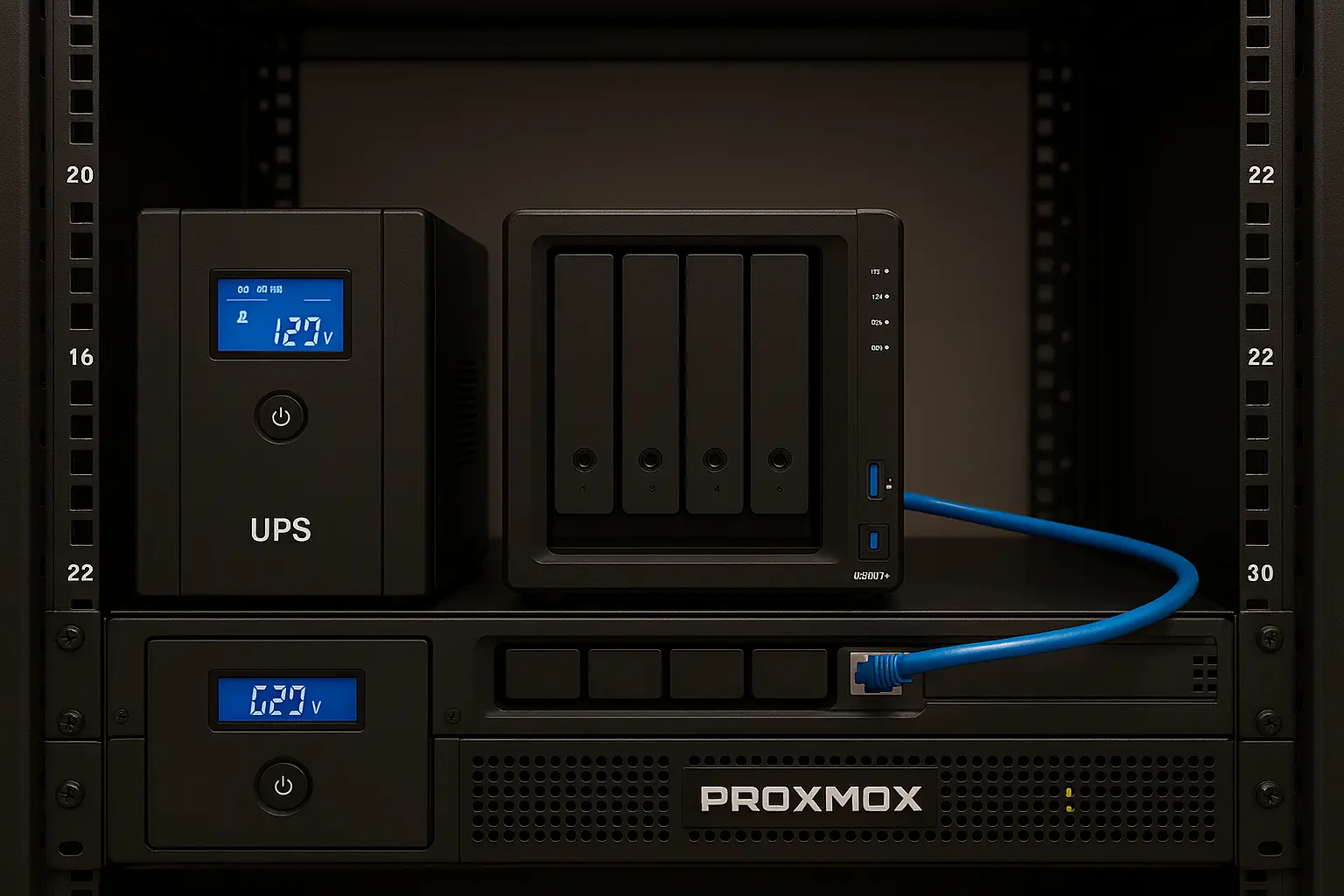
Un onduleur sans supervision, ça ne protège qu'à moitié. NUT connecté à Proxmox via Synology : monitoring en temps réel et arrêt automatique en cas de coupure.
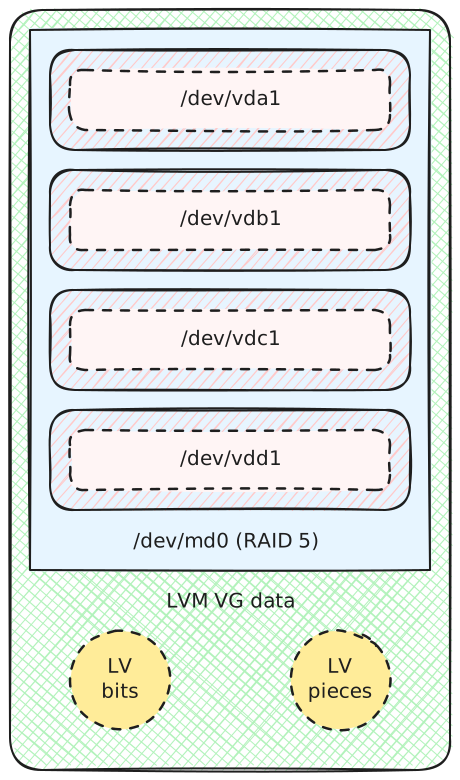
Les solutions RAID classiques gaspillent de l’espace lorsque les disques sont de tailles différentes. Le RAID logiciel Linux avec LVM exploite la capacité totale de chaque disque et permet d’étendre le stockage en remplaçant un ou deux disques à la fois.1 Nous partons de quatre disques de taille identique : $ lsblk -Mo NAME,TYPE,SIZE NAME TYPE SIZE vda disk 101M vdb disk 101M vdc disk 101M vdd disk 101M Nous créons une partition sur chacun d’eux : $ sgdisk --zap-all --new=0:0:0 -t 0:fd00…

Ce mois-ci : scan de vulnérabilités, monitoring uptime, suivi des mises à jour Linux, documentation statique et un magazine scientifique à découvrir.

Bloquer l'accès Internet d'un objet connecté ou d'un appareil enfant avec UniFi Network : méthode mise à jour, compatible IPv4 et IPv6.
Akvorado collecte des flux sFlow et IPFIX via UDP. Comme UDP ne retransmet pas les paquets perdus, il faut les traiter rapidement. Akvorado exécute plusieurs routines écoutant sur le même port. Le noyau devrait répartir équitablement les paquets reçus entre ces routines. Cependant, cela ne fonctionne pas comme prévu. Quelques routines présentent une perte de paquets importante : $ curl -s 127.0.0.1:8080/api/v0/inlet/metrics \ > | sed -n s/akvorado_inlet_flow_input_udp_in_dropped//p…
 Nouveau
 There's a new package manager in town, and this one fits in about 250 KB. Pooya Parsa, a longtime Nuxt contributor and creator of Nitro and UnJS, has introduced upm, a TypeScript package manager for the npm registry that uses Node.js's built-in networking, worker threads, compression, and filesystem tools. It has a JavaScript API, reads supported .npmrc settings, and can install from several other package managers' lockfiles. With so many package managers already out there, do we really need…
Socket has joined the OpenJS Foundation’s new Security Stewardship Program as an inaugural partner, helping fund vulnerability research, triage, patching, and security releases across the JavaScript ecosystem. The program launches with an initial focus on Node.js, where the security workload is growing faster than the funding available to support it. “AI is driving a sharp rise in vulnerability reports, pushing many open source projects to shut down their bug bounty programs. The bottleneck is…